Guide · Devices, robotics and AI agents
Connected devices and AI agents:what a small team can automate now.
A connected device is a sensor or a machine that reports what it sees to software; an AI agent is software that uses tools to complete a task in several steps. Together they let a small business automate work that used to need a person on site. Here is what is realistic and where a person still decides.
What a connected device can do for a company
A connected device does three things: it measures, it alerts and, sometimes, it acts. A sensor in the store room reports the temperature every minute. A counter at the door records how many people came in. A machine reports that it has finished, or that it has stopped. None of this is new; the price is. A board like the ESP32 costs a few euros before the sensor and the enclosure, connects to Wi-Fi and runs from a USB charger for as long as its power holds.
The value is what you stop doing by hand, and what you learn once the data exists: how often the temperature drifts, how long a job really takes. A small board beats a big platform when the question is specific and the volume is small; a monthly fee per device makes sense with hundreds of devices and a team to manage them. In a small business the question comes first; the platform, if ever, later.
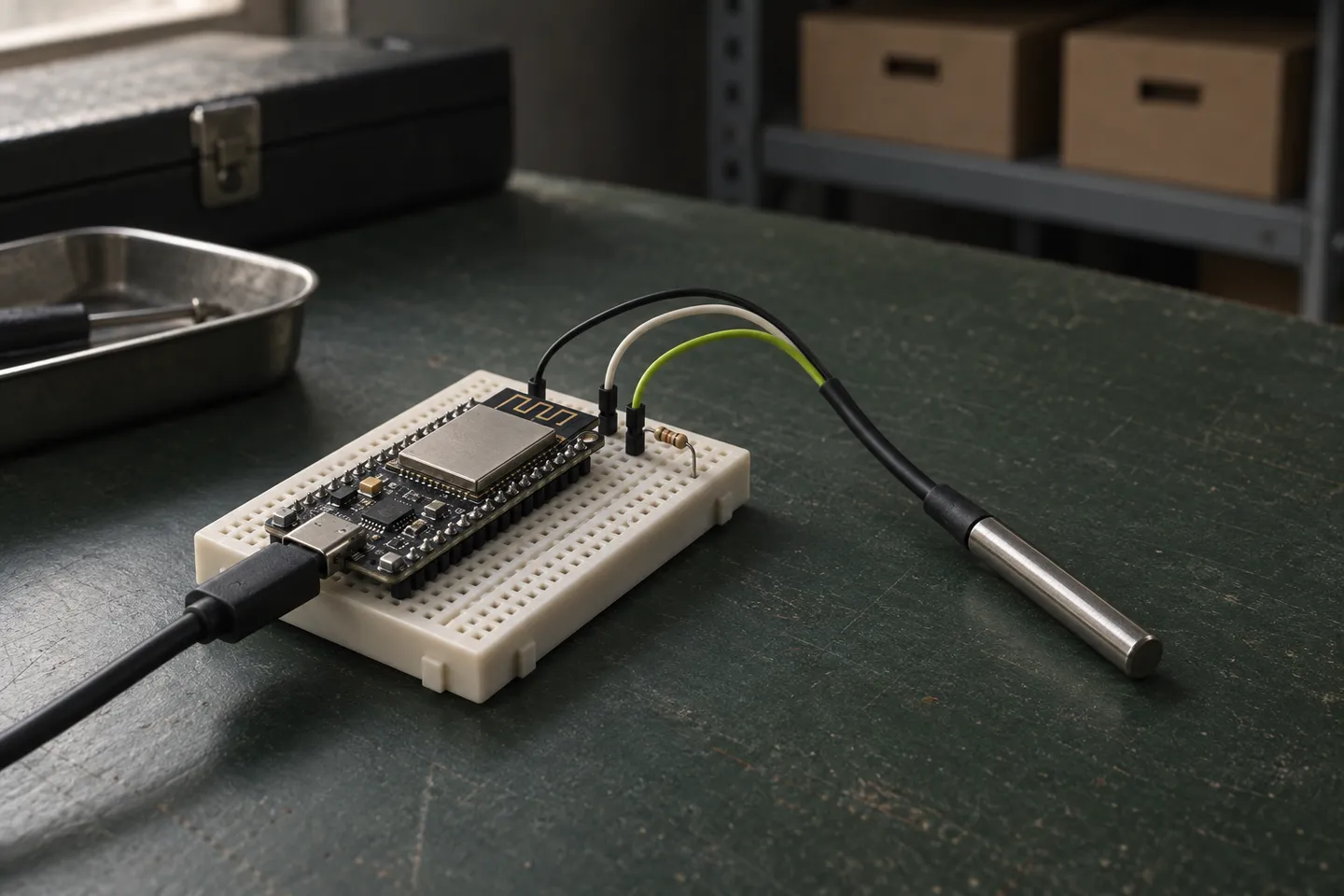
From sensor to screen: how an ESP32 IoT prototype is built
Every prototype has the same four parts, whatever it measures: a sensor on a board, a connection, a small service and a screen. The board is an ESP32 or an Arduino; the connection is Wi-Fi, usually with MQTT, a lightweight protocol made for small devices; the service is a few lines of code on a server, or Home Assistant, the open-source home automation platform that also suits a workshop or a shop.
- 01 Sensor and board An ESP32 or Arduino reads the value: temperature, presence, a count or a machine state.
- 02 Connection Sends the readings over Wi-Fi, usually with MQTT, a protocol made for small devices.
- 03 Data and service A small backend or Home Assistant stores the readings and applies the rules.
- 04 What people see A dashboard, an alert on the phone or a field in the app you already use.
A prototype proves the idea: the sensor reads what you need and the alert reaches the right person. Production needs more: an enclosure, reliable power, certification if the device is sold or installed at customers, and support. Being honest about that gap keeps the prototype cheap.
Robotics and the physical world: what building robots taught me
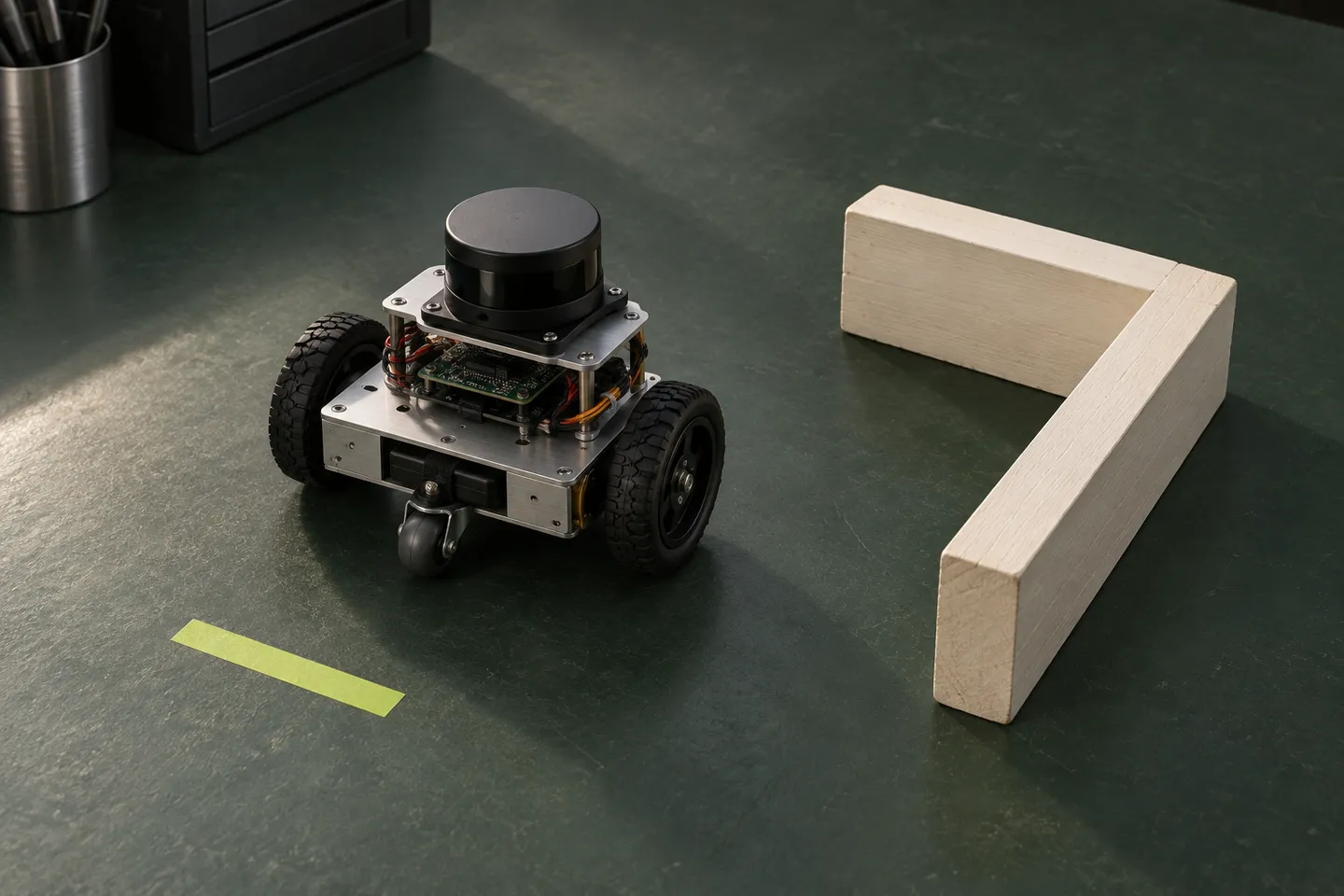
My hardware projects were personal learning projects, not client work. I built robots to learn lidar, navigation with ROS 2 and sensors, built devices with Arduino, ESP32, ESP8266 and Raspberry Pi, and automated my own home with Home Assistant. I also designed iGrow, an automatic controller for growing conditions that I filed as a utility model application (OEPM, 2018). It is not an installation I can show you in a factory, but it is why I know what a device does when the Wi-Fi drops.
Robotics is a hard teacher because failures are visible: a robot that misreads a lidar scan drives into a wall. Software that responds to reality has to expect noisy readings, late messages and a dashboard that still shows the last 25 degrees after the sensor has dropped off.
That habit carries into the business software I build professionally: custom apps, business automation with RPA and AI, and agentic systems. Assume the input is sometimes wrong, check before acting, make failures visible.
AI agents: what changes for a small team
Rules and RPA still do most of the work well: when the steps are fixed, they are fast, cheap to run and predictable. What they cannot do is handle a case nobody wrote down.
An AI agent is software in which an AI model uses tools to complete a task in several steps: read the email, look the customer up, prepare the reply, hold it for review. It handles variation: a request phrased in ten ways, a document in a new layout. In return it needs a log of what it did, limits on what it may touch and a person who reviews the exceptions.
| Rules and RPA | AI agents | |
|---|---|---|
| What it handles | Fixed steps, known formats | Variation, free text, new layouts |
| When it fails | On any case not written down | When the task is vague or unchecked |
| Cost of setup | Low for simple tasks, grows with exceptions | Depends on the task, the model use and the review needed |
| Where a person reviews | Errors and stops | Exceptions and actions with consequences |
For a small business, AI automation means this: work that varied a little, and so needed a person, can now be automated, with a person still reviewing what matters.
When it makes sense to start, and how
Start when one question repeats every day: is the store room too warm, did the machine stop, who answers today’s requests. If answering it takes someone on site, or someone reading through requests, it is a candidate.
The way I work is the same for devices and agents: a free consultation of thirty minutes; for suitable projects, a free basic demo with sample data and an agreed scope, one sensor on one dashboard or one agent on one type of request; then a written quote for the full build with features, an estimated timeframe and price.
Security is part of the design from the start. Reverse engineering and bug bounty programmes, which I also take part in, shape how I design accounts, data and integrations: a device gets its own credentials and the least access it needs, an agent reaches only the data its task requires, and every action leaves a trace.
Questions before we start
Do I need custom hardware or can I buy something off the shelf?
Buy when a product exists for your case: a smart plug, a ready-made temperature sensor, a counter. Build when the question is specific, the product does not exist or its subscription costs more than the device. A prototype is often the fastest way to find out which.
Can an ESP32 prototype go into production?
It can grow into one, but not as it is. Production means an enclosure, stable power, a way to update the firmware and certification if the device is sold or installed at customers. The prototype proves the idea and defines what the production version has to do.
What is the difference between RPA and an AI agent?
RPA follows steps you wrote down, clicking and typing as a person would; it fails on anything unexpected. An AI agent decides the steps with a model and tools, so it handles variation, and it needs logs and review because it can be wrong.
Is it safe to connect devices and AI to my company’s data?
It is as safe as the design. Devices and agents get their own credentials and the least access their task needs, actions with consequences pass through a person, and everything is logged. We agree those limits before anything touches real data.