Guide · Technical decisions
An idea for a connected device? Start with a useful prototype.
Before paying for a custom device, test whether it measures something useful in the place where you will use it. A sensor that works on a desk may behave differently in a warehouse. A first prototype should answer a business question, such as whether remote temperature readings would help your team respond sooner.
What should the device help you do?
A connected device measures or acts on something physical and shares information with another system. This is often called IoT, or the Internet of Things. For a business, the useful question is what someone will do differently with that information.
For example, a warehouse temperature sensor could help identify areas that get too warm. Define where it will be placed, the temperature range, the acceptable error and who checks an alert. A graph that nobody uses does not justify a custom device.
Ask for readings to be compared with a suitable reference. A number that looks stable can still be wrong. This first trial would not by itself establish that the device is suitable for safety-critical monitoring.
Can an existing sensor solve the problem?
Check existing products before commissioning electronics. Ask whether a ready-made sensor can take the required measurement, send it to your chosen system and work in the installation location. Include subscriptions and replacement costs.
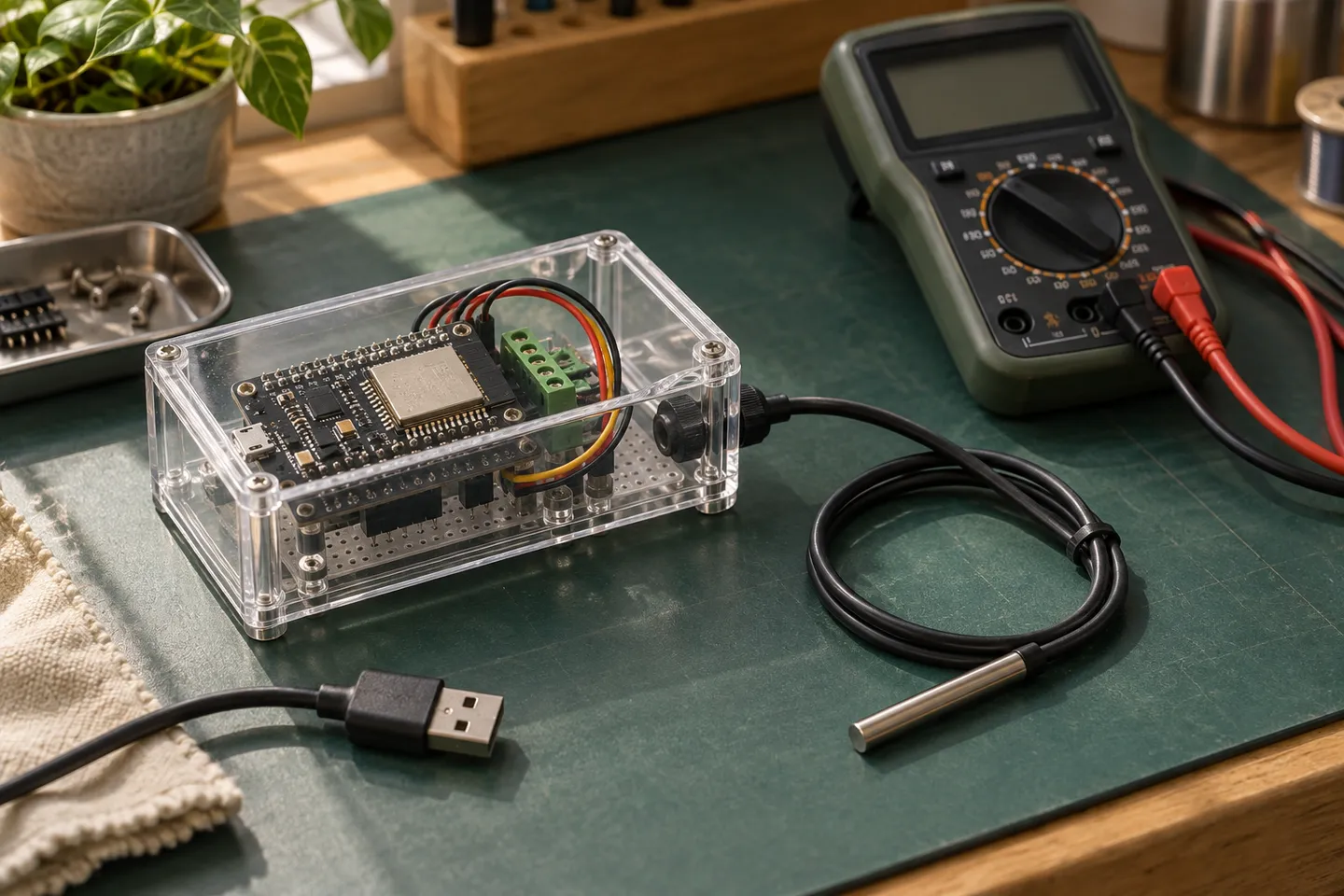
A prototype can use an ESP32-based development board: a small programmable board that helps test connected electronics before designing a custom circuit. The name of the chip matters less than whether the complete device meets your needs.
How often will someone need to change the battery?
Battery life affects the day-to-day cost. A sensor that needs frequent visits may cost more to operate than a more expensive device with a suitable power supply.
Ask for an estimate based on the whole prototype in its intended use, including measurement, wireless transmission and reconnecting after an outage. A low-power chip specification alone does not establish the battery life of a complete device. Espressif documents power-saving modes, but the actual design still needs measurement.
What happens when Wi-Fi or power fails?
For the warehouse example, ask to see the network disconnected and restored. Decide whether readings must be stored during the outage and how you will know that information is missing. A screen showing yesterday’s temperature must not make it look like a live reading.
The trial should also show what happens after a power cut and whether an update can leave a device unusable. Some development tools provide recovery mechanisms, but they need to be configured and tested. Your practical question is whether someone must visit the site to get the device working again.
What should the prototype quote include?
Include a trial at the intended location, a suitable temporary enclosure, power, network access and a way to view the readings. Agree how long the trial lasts, what counts as a useful result and who deals with faults.
For the temperature example, ask for the comparison readings, observed connection gaps, battery measurements and installation notes. Record conditions that were not tested. One successful afternoon on a workbench does not establish performance through a season in a warehouse.
When do you need a custom circuit board?
A custom board becomes worth considering when size, battery use, connections or assembly make an existing board unsuitable. First establish the measurement and the value of the result. Changing the electronics is expensive if the basic requirement is still uncertain.
A working prototype is not yet a product ready for sale. Production design, testing and applicable requirements need their own scope. The useful next step may be a small field trial, an existing commercial sensor or a custom design, depending on what the prototype actually showed.
To define the next step, read when to use sensors, IoT or robotics.
Sources and further reading
Questions before we start
Do I need to know electronics to commission a prototype?
No. Describe what you need to measure, where it will operate and what you will do with the result. The developer should explain the options and agree tests you can assess.
Is an ESP32 prototype a finished product?
No. It can help test an idea quickly, but installation, reliability, production and applicable requirements still need to be addressed.
How much does a connected-device prototype cost?
The sensor, power supply, installation, data display and tests affect the scope. Ask for the first experiment to be quoted separately from manufacturing. A cheap component does not determine the cost of the complete system.